US Postage Due Bills or Follow Sheets: Types Of Stamps?
Browsing eBay, I see a wide variety of postage due bills and top-of-stack sheets, cards, and envelopes from different eras. Many have postage due stamps affixed, but others have regular postage stamps, air mail, special delivery etc.
Presumably these were primarily for business senders (business reply mail) where the amounts were fairly large and/or encompassing a large number of pieces had postage due and this was more expedient than affixing stamps to individual pieces.
Were there regulations or limitations as to what types of stamps were permissible to affix to these sheets, and did those regulations change over time?
Or was it the case that prior to the discontinuation of postage due stamps in 1986, postage due stamps were supposed to be affixed, but affixing postage, airmail, special delivery stamps, while improper, was tolerated, because the amount owed was paid regardless?
Example images (not mine, from eBay):
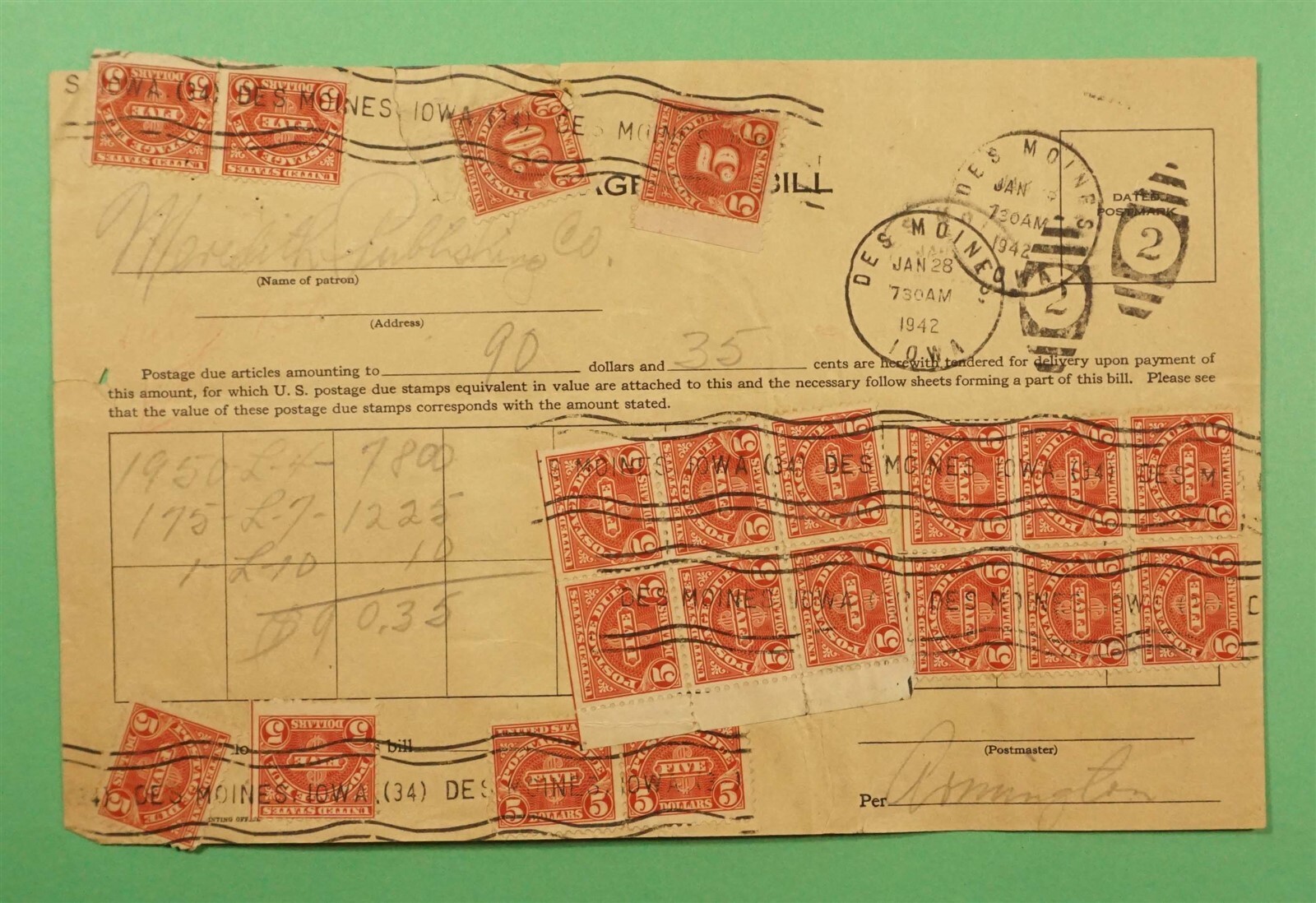
This example (1942 use) sold on eBay at auction for $44.99 in July of 2023.
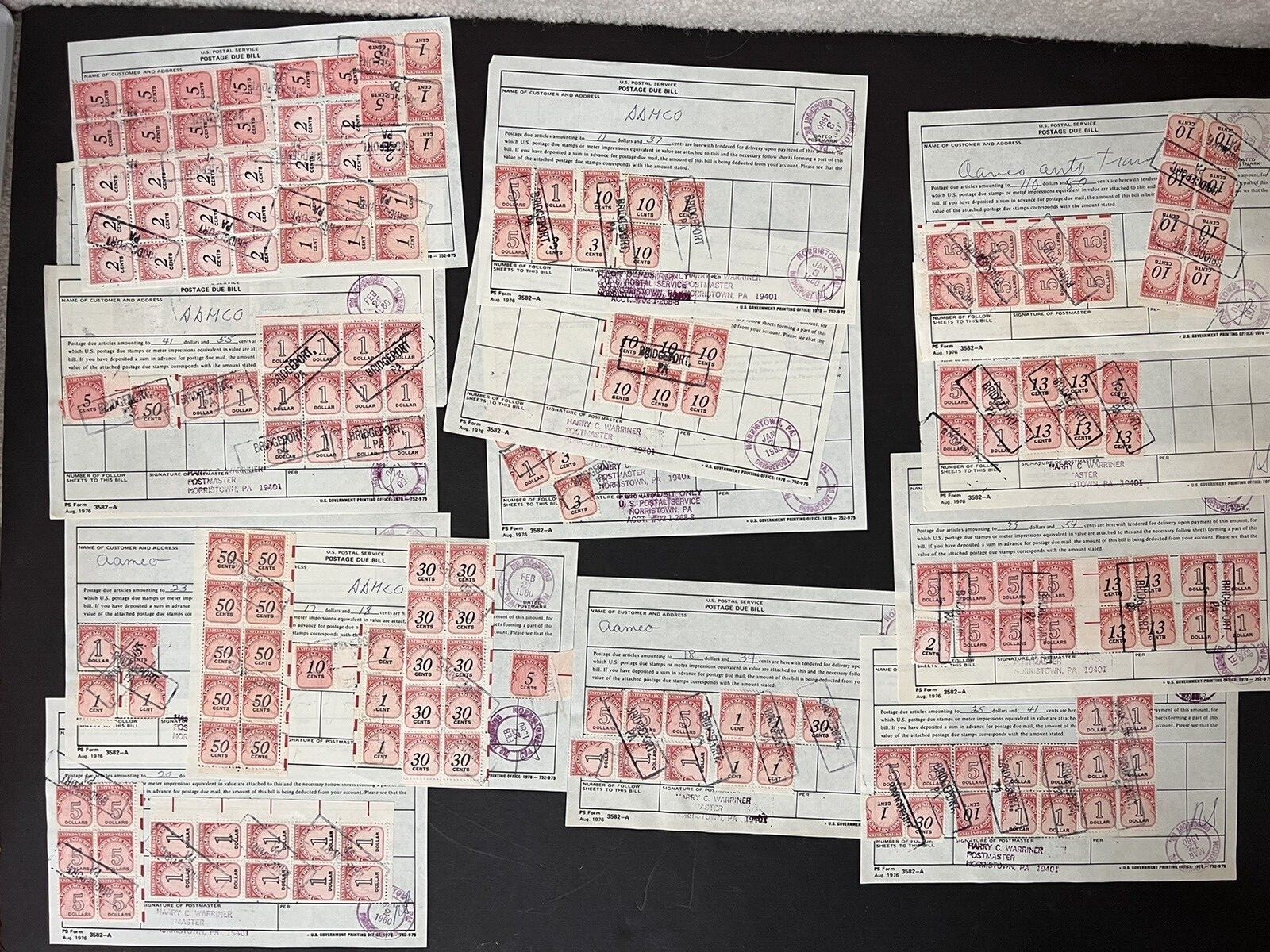
This lot, encompassing the late 1970s and early 1980s, sold for $25.50.
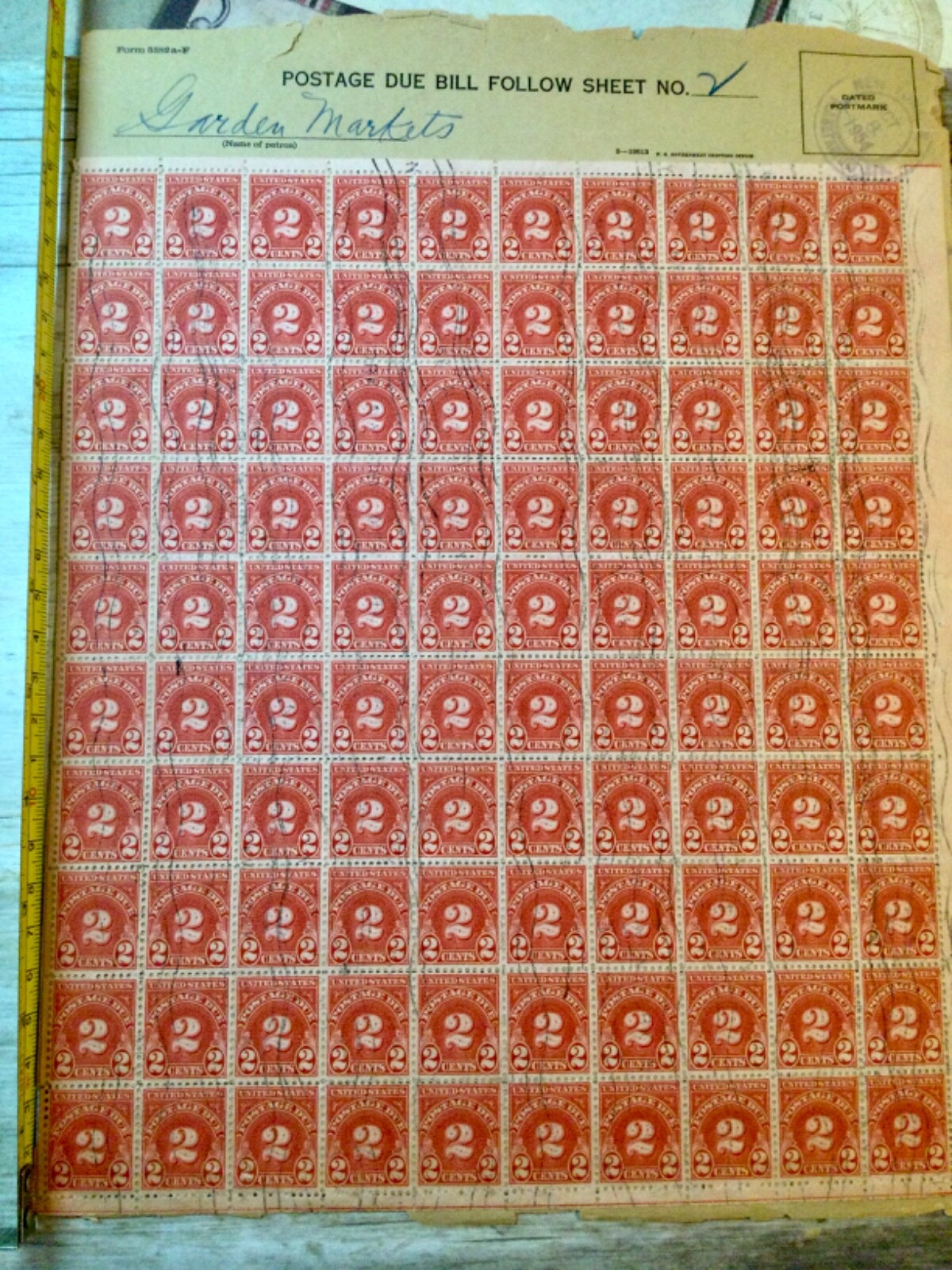
This 1954 bill with a complete sheet of 2c postage dues sold via Buy It Now for $20.05.
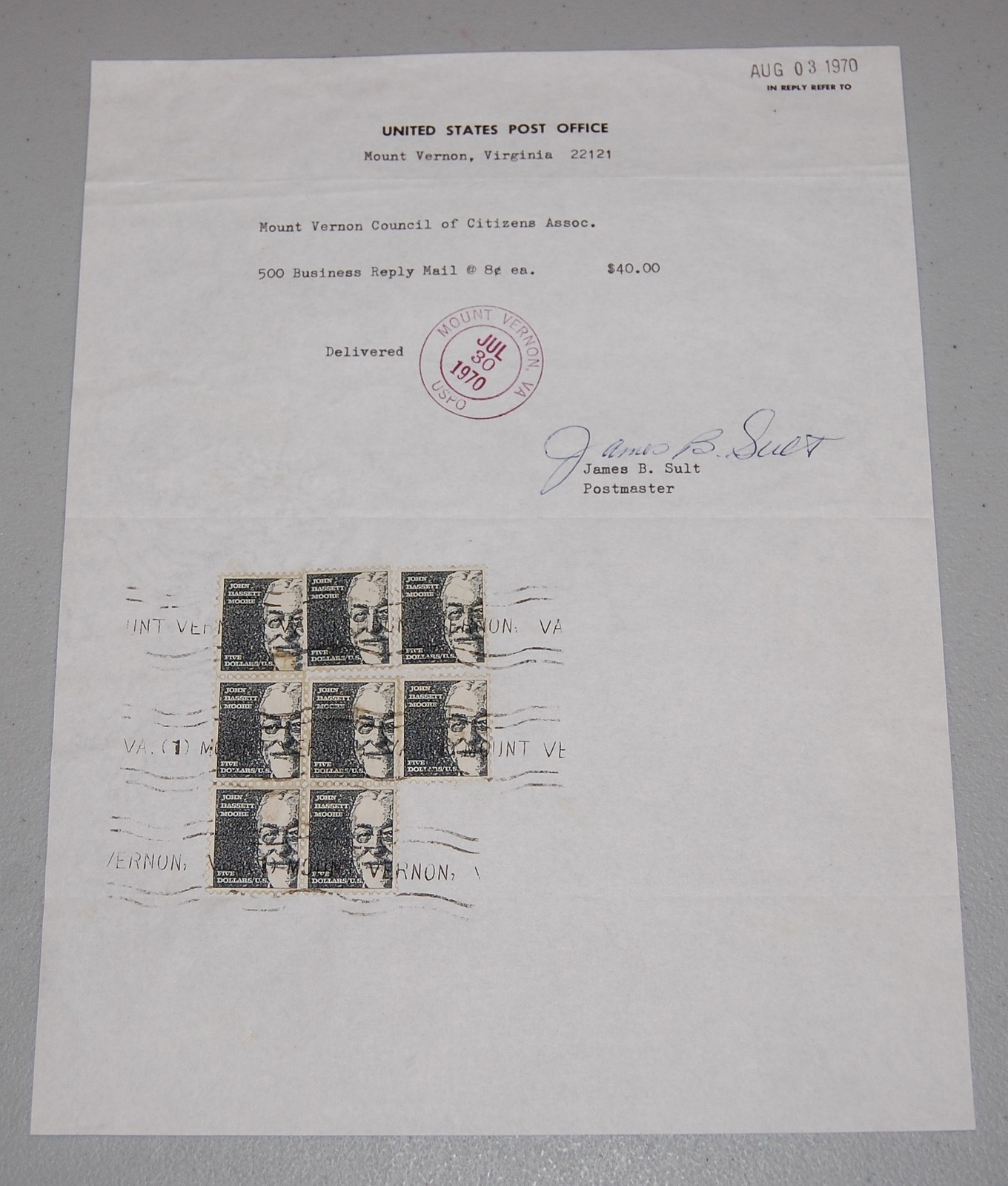
This 1970 letter serving as a postage due bill has 8 x $5 Moore postage stamps affixed, and sold on eBay at auction for $81.01 in July.
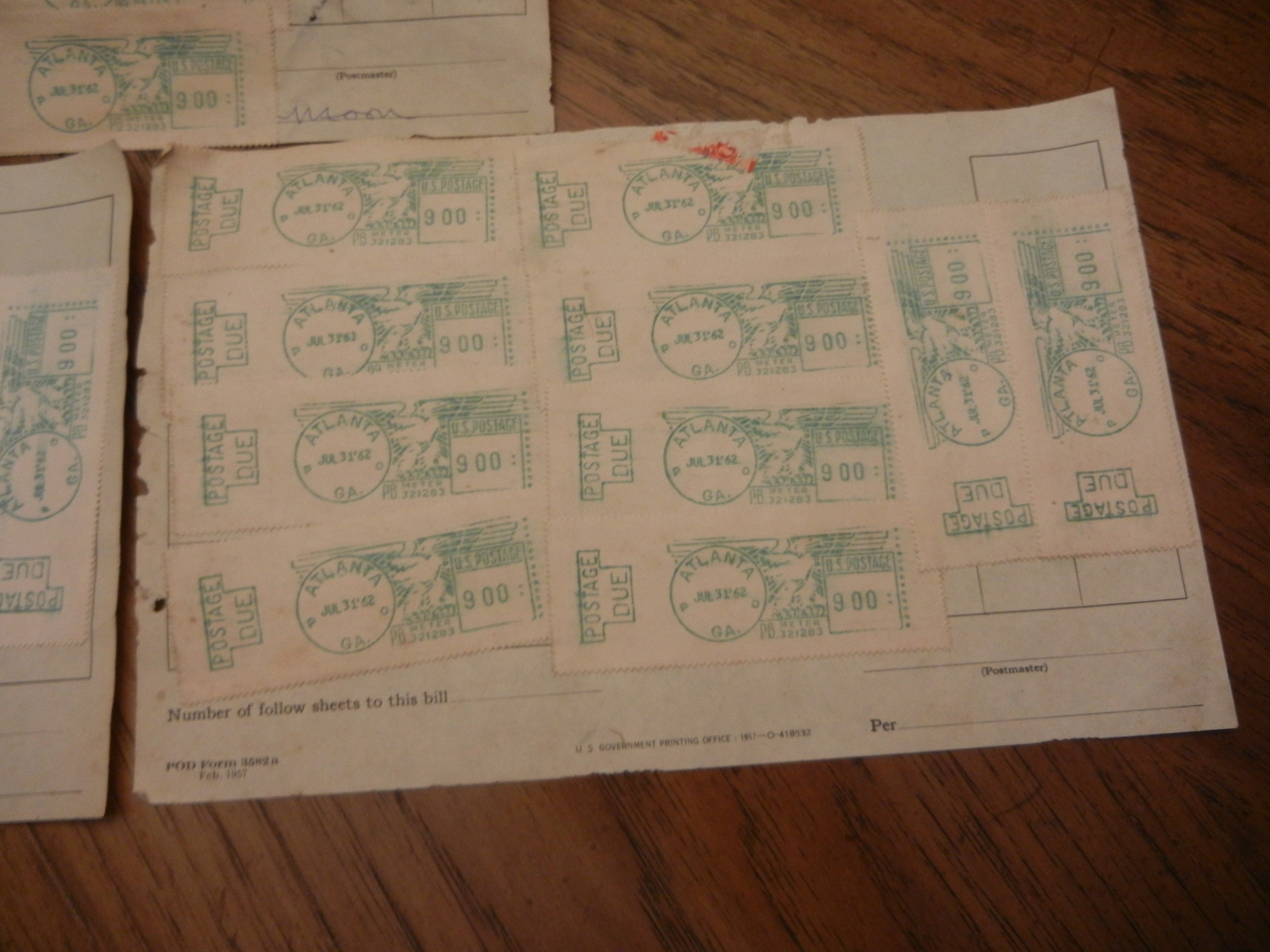
This 1962 bill shows postage due meters; part of a lot still listed on eBay for $65 OBO.
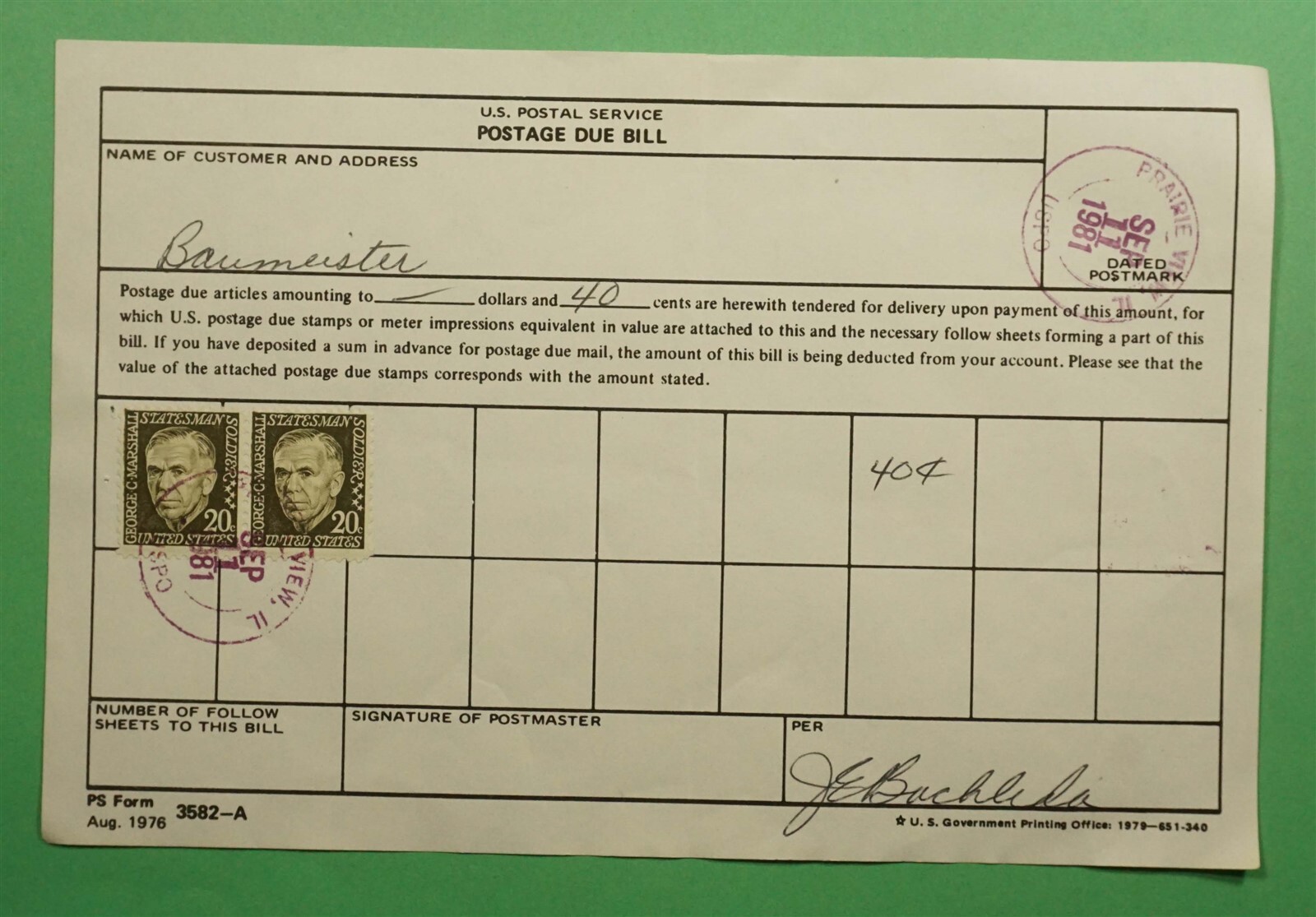
Here is a 1981 postage due bill (prior to the phaseout of postage due stamps), but with postage stamps affixed, despite the wording on the bill that postage due stamps were to be affixed. Currently running eBay auction.
From forum member mml1942:
Regulations like these can be found in the Postal Laws & Regulations (PL&Rs) prepared by the USPOD, and they can also be found on the uspostalbulletins.com website here www.uspostalbulletins.com
I tried just now and the site was not responding.
These are also on Google Books. This link will take you to one of my Portals that provides the URL for many on-line editions of these PL&R’s:
https://drive.google.com/file/d/1AB…dX3AGDx
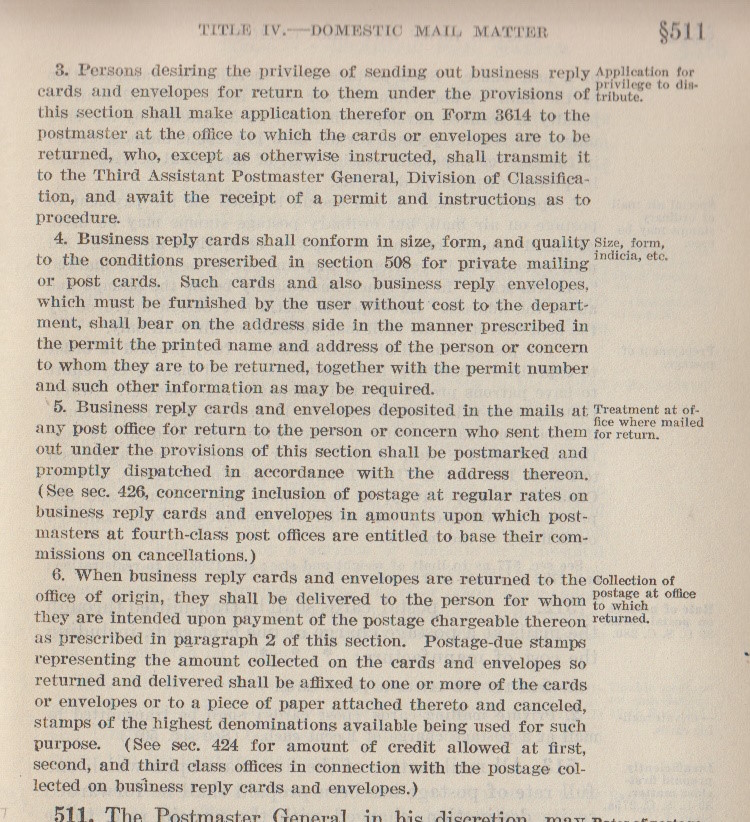
The following images are from the 1932 edition of the PL&R
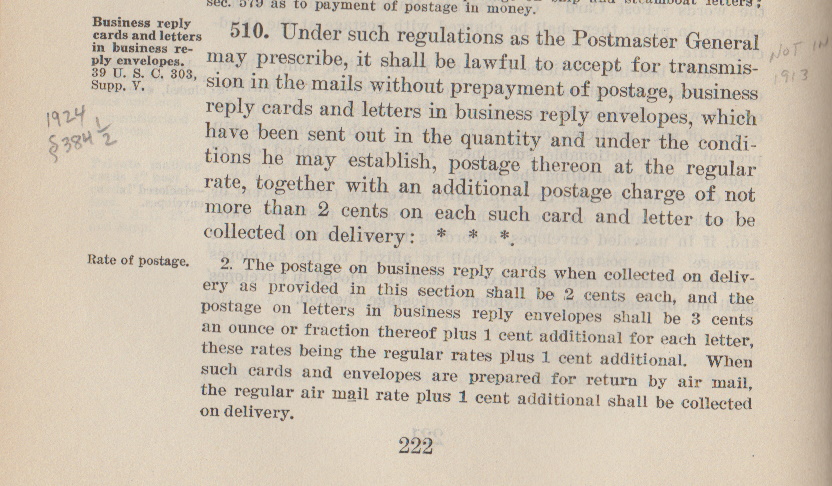
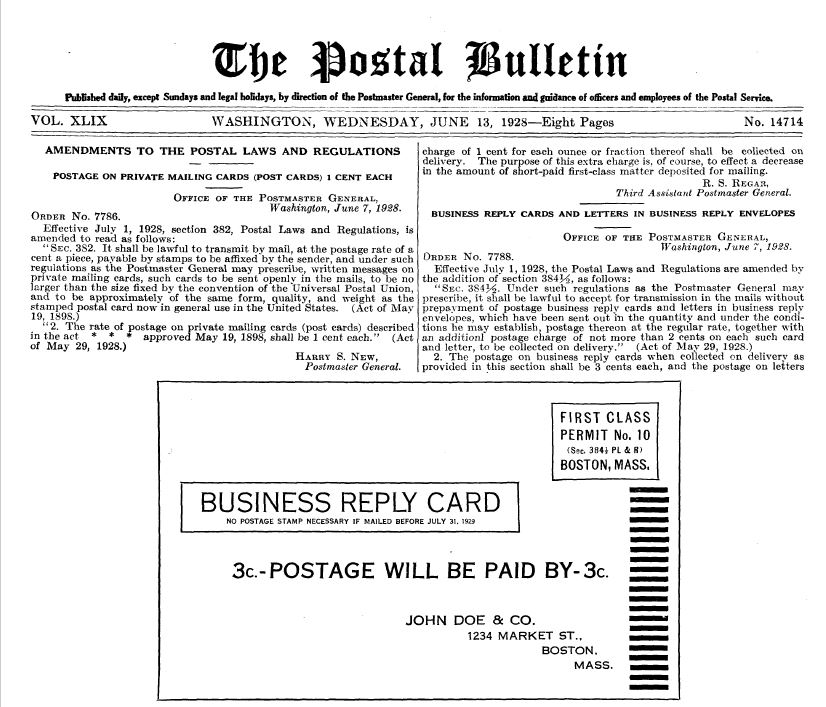
I found the original instructions in the Postal Bulletin #14714, dated June 13, 1928. These follow…
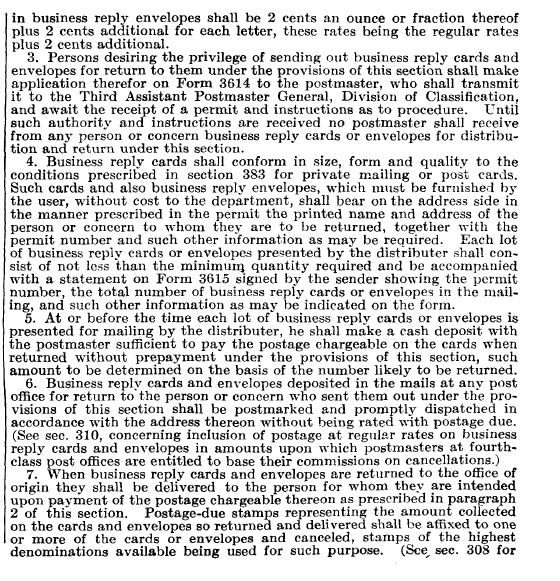

These were again revised on Sept 14, 1928 in PB#14792:
www.uspostalbulletins.com/PD…19280914.pdf
I’m sure they were revised regularly and included in the Postal Bulletins. My original insert from the PL&R for 1932 then shows the regulations as of that date.
As I don’t know when the use of postage dues stamps was phased out, but I expect that the regulations was modified then to identify the manner of payment using other than postage due stamps. Again, the Postal Bulletin is a likely source.
To quote the late Paul Harvey: “And now… the rest of the story…”
A few weeks ago I was doing my normal browsing of U.S. revenue lots on eBay, and as I scrolled through images on one particular listing, I passed all of the revenue material and the images proceeded into the “other” portion of the lot, and by that point I had decided the lot wasn’t really worth my time. I was just about to close the browser window when I saw some images that made me go:

While I do only collect/specialize/focus in certain specific areas, at my core I subscribe to notion that if you see something odd, interesting, unusual, scarce, or aesthetically pleasing, you’ll likely never go wrong acquiring it (financial limitations notwithstanding).
I started looking at current and completed eBay listings, Hipstamp, Stamp Auction Network archives, auction catalogs, and could not find a single comparable example. Maybe they’re just so low of a value that they wouldn’t ever be offered individually, hence there not being records of similar items, but dang it, they sure look unusual to me.
So I placed my high bid and waited. I ended up winning the lot for far less than my max, so either I was mistaken in the appeal of what I saw, and it wasn’t of enough interest/demand/scarcity for others to bid higher, or… given the way, the lot was categorized and titled, the people that WOULD be interested just didn’t know it was available.
I have seen a myriad of follow sheets/postage due bills/top-of-stack sheets (whatever term you choose to use) over the years, but they almost universally fall into one of the following categories:
- Sheets with exclusively postage due stamps affixed
- Sheets with exclusively postage stamps affixed, most commonly leading up to or after the phaseout of postage due stamps in 1986.
Yes, I’ve seen examples of earlier sheets with postage stamps affixed (like some of the examples shown in previous posts in this thread), but they tend to be the exception rather than the rule.
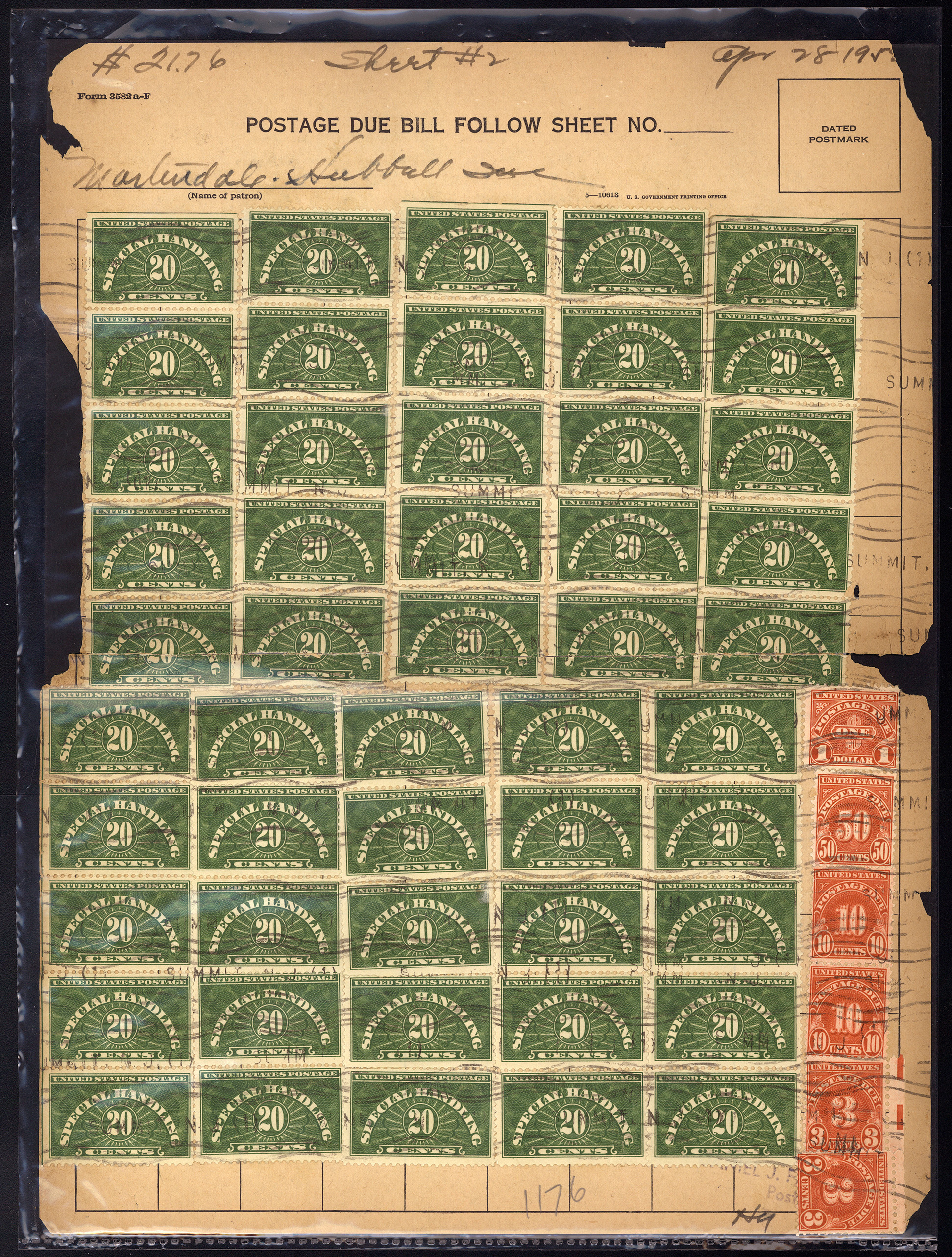
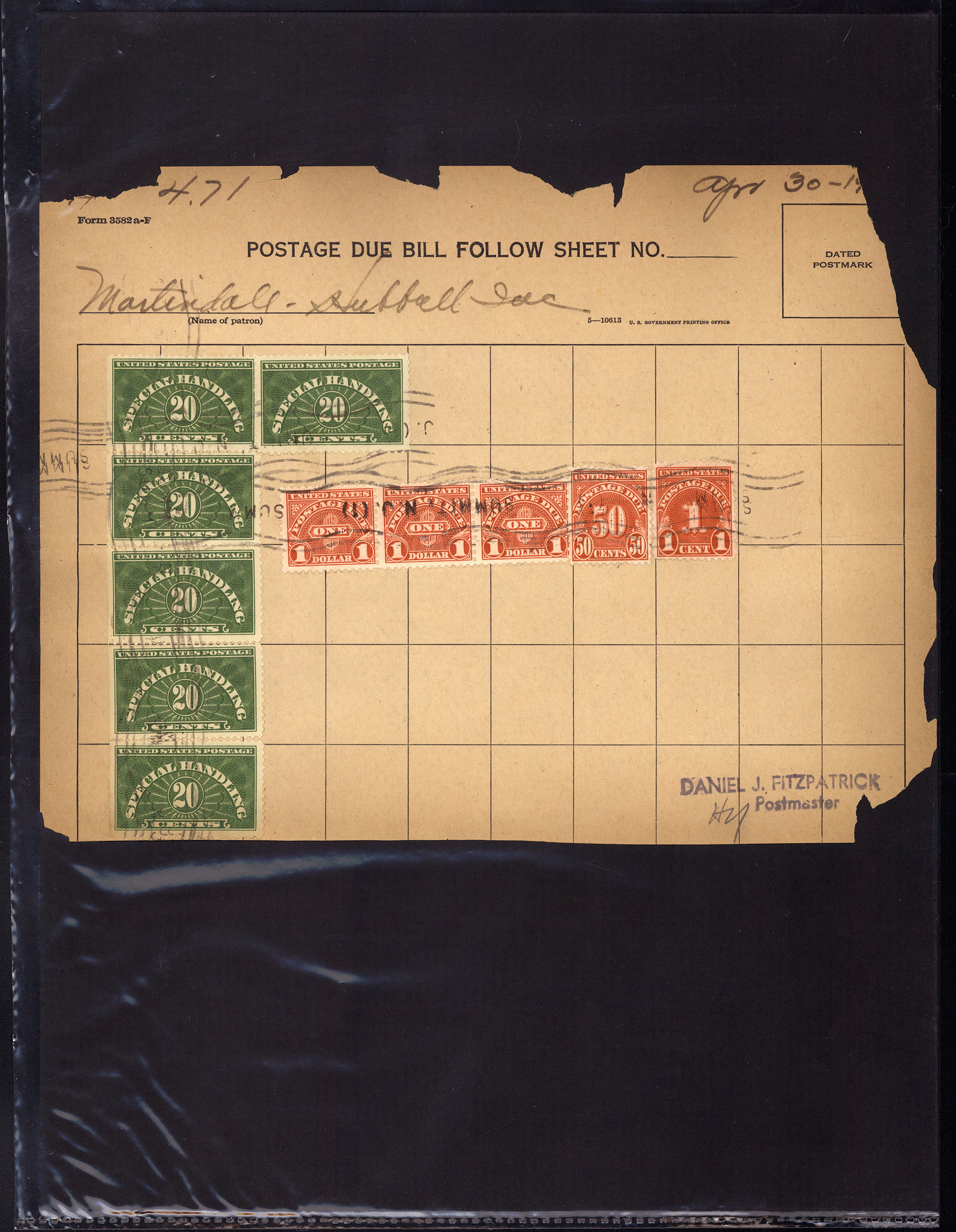
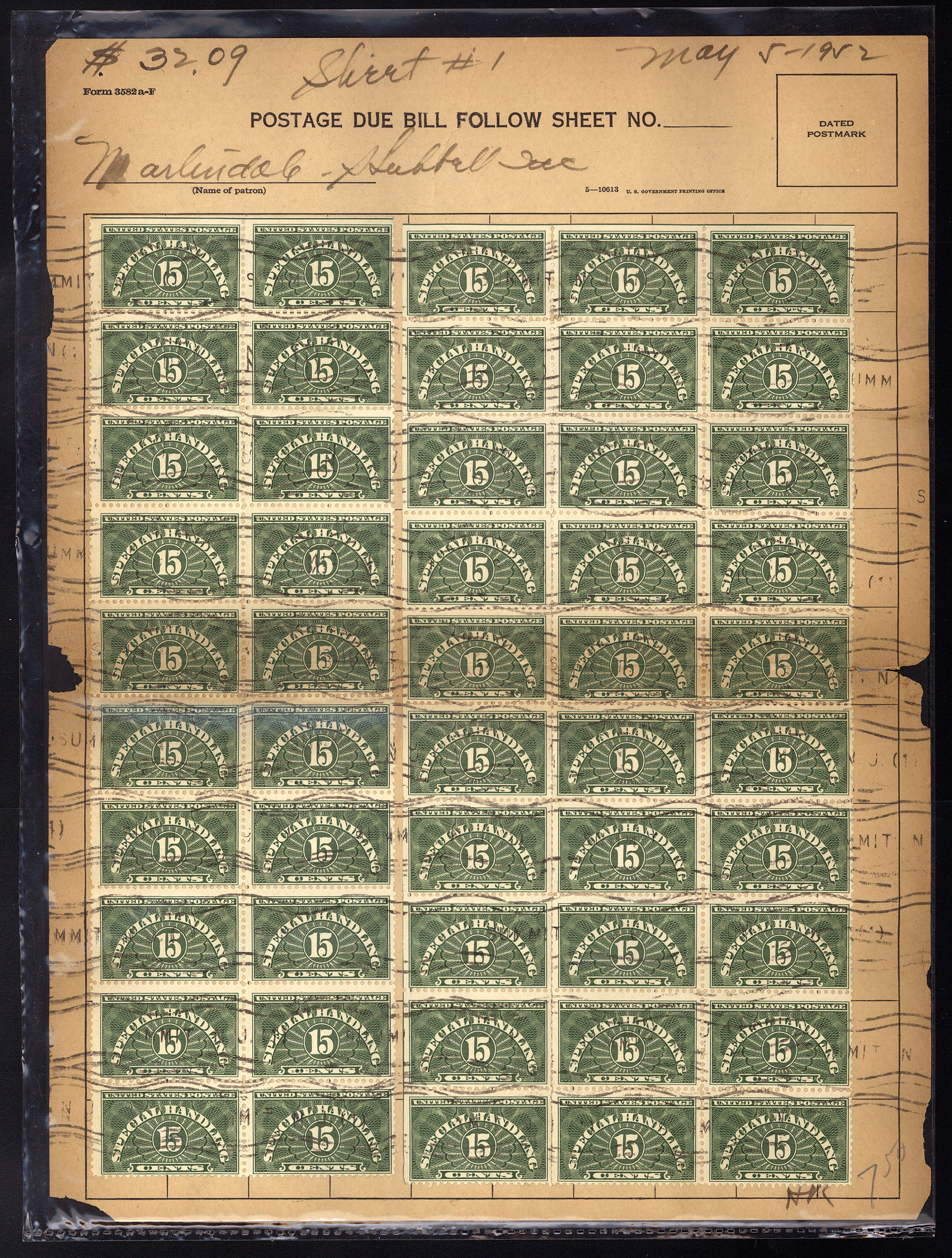
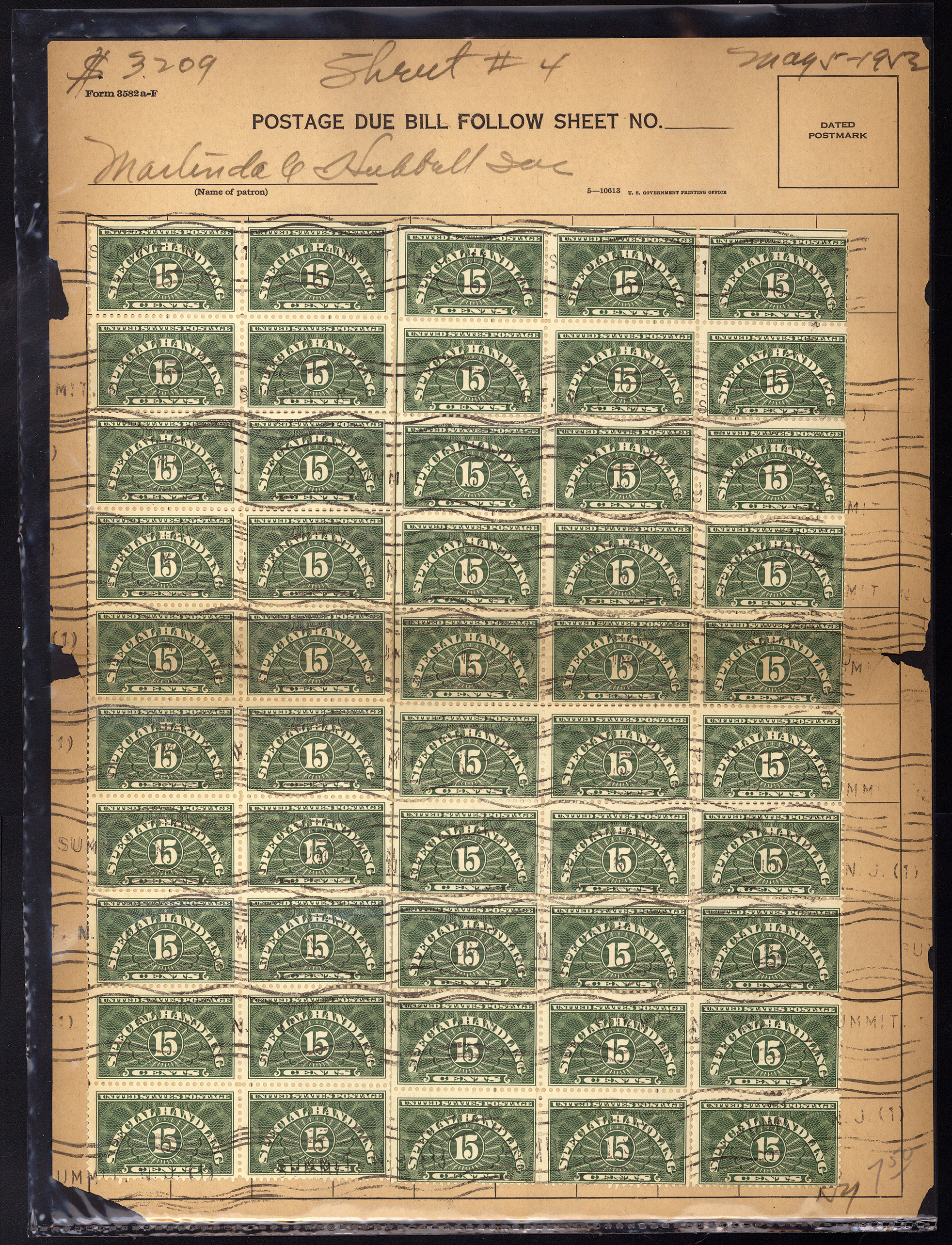
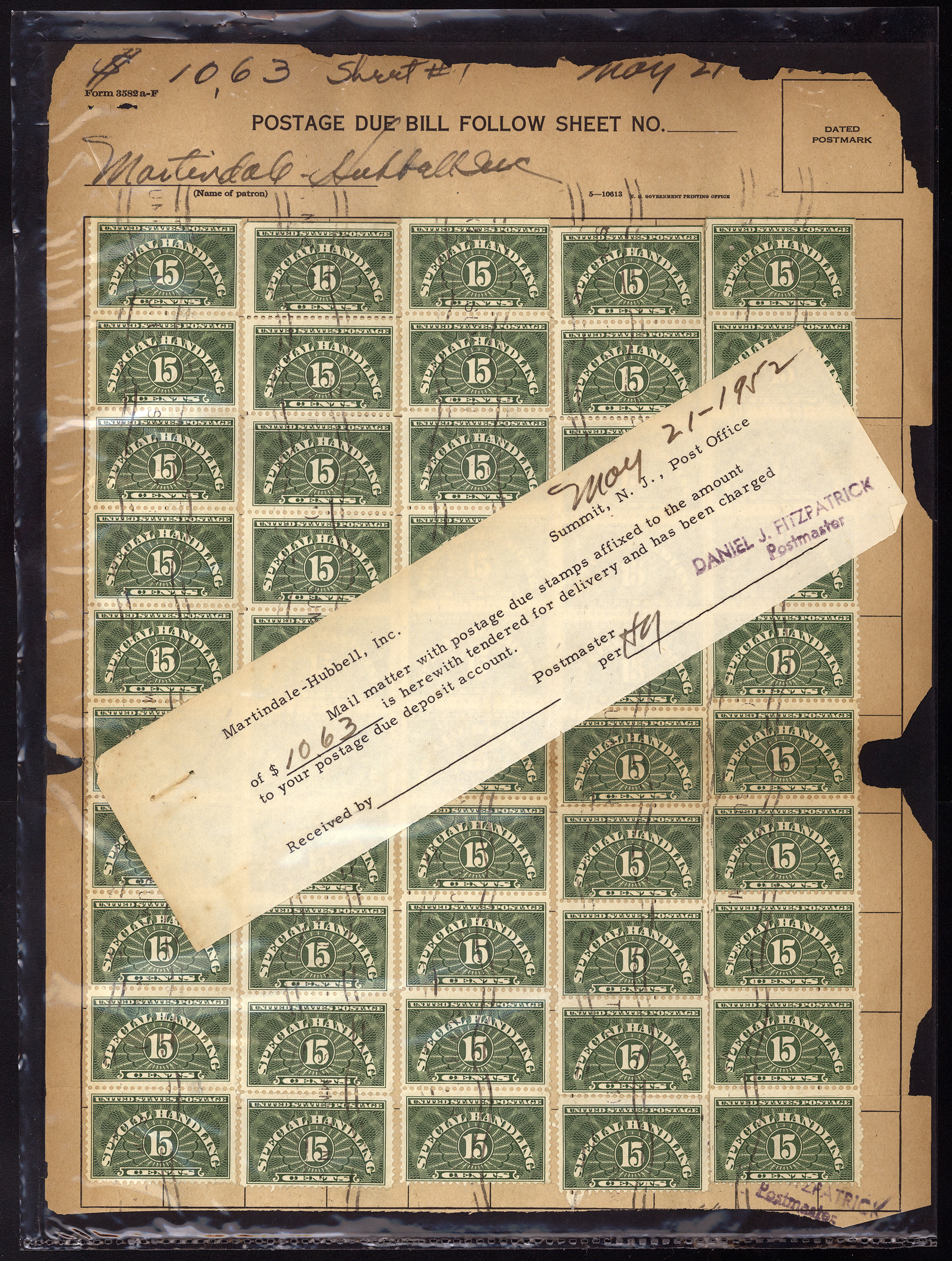
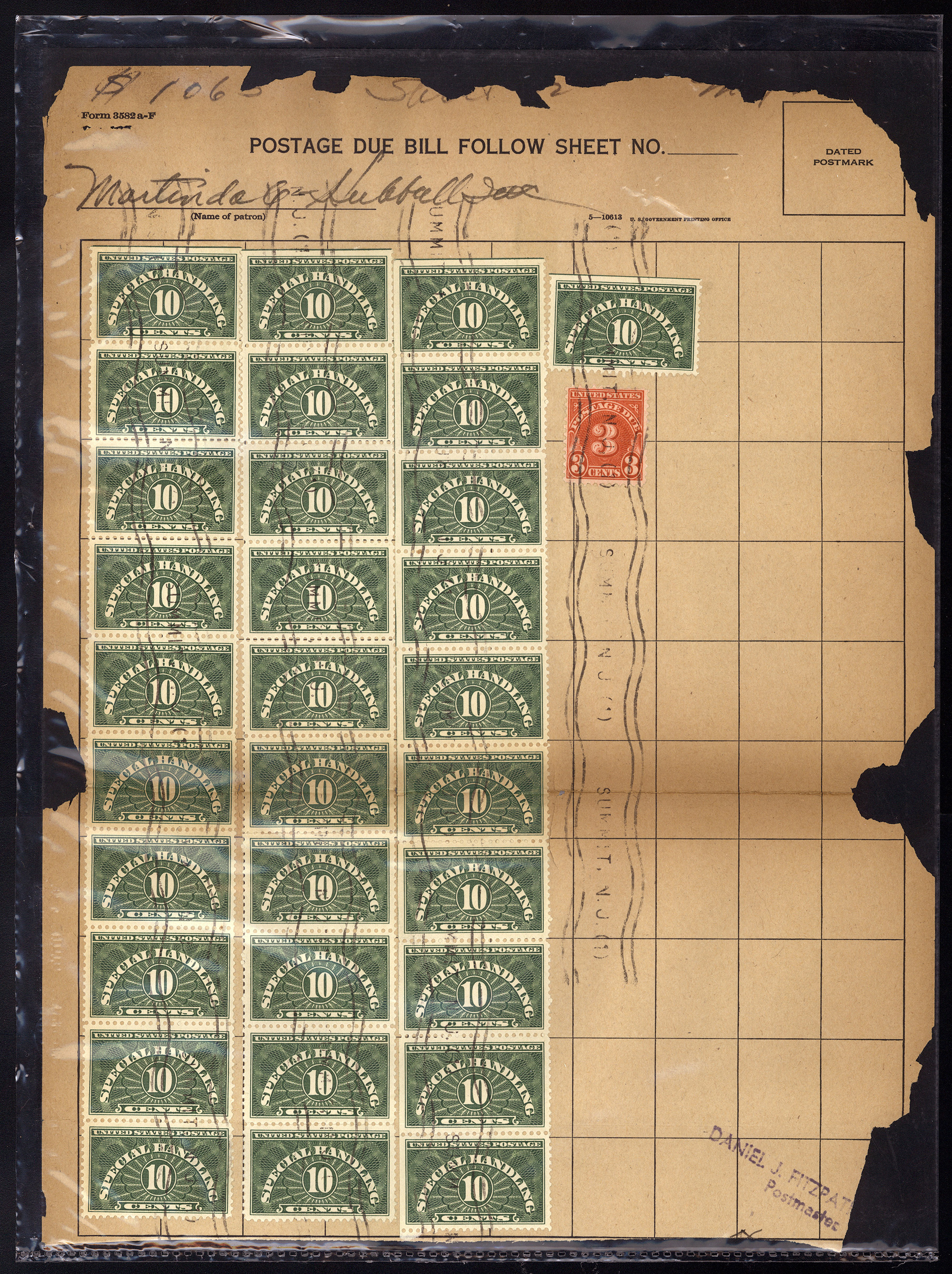
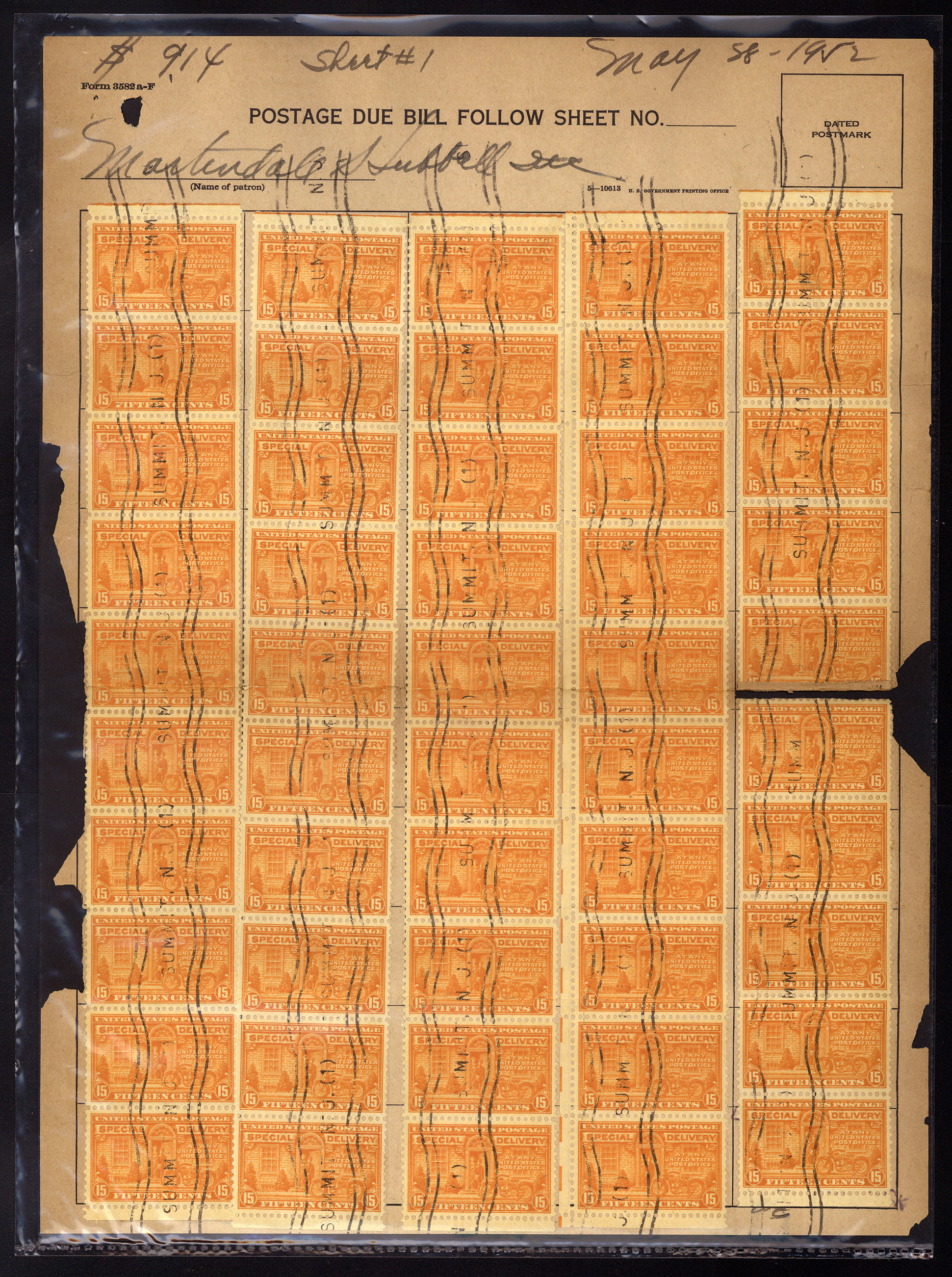
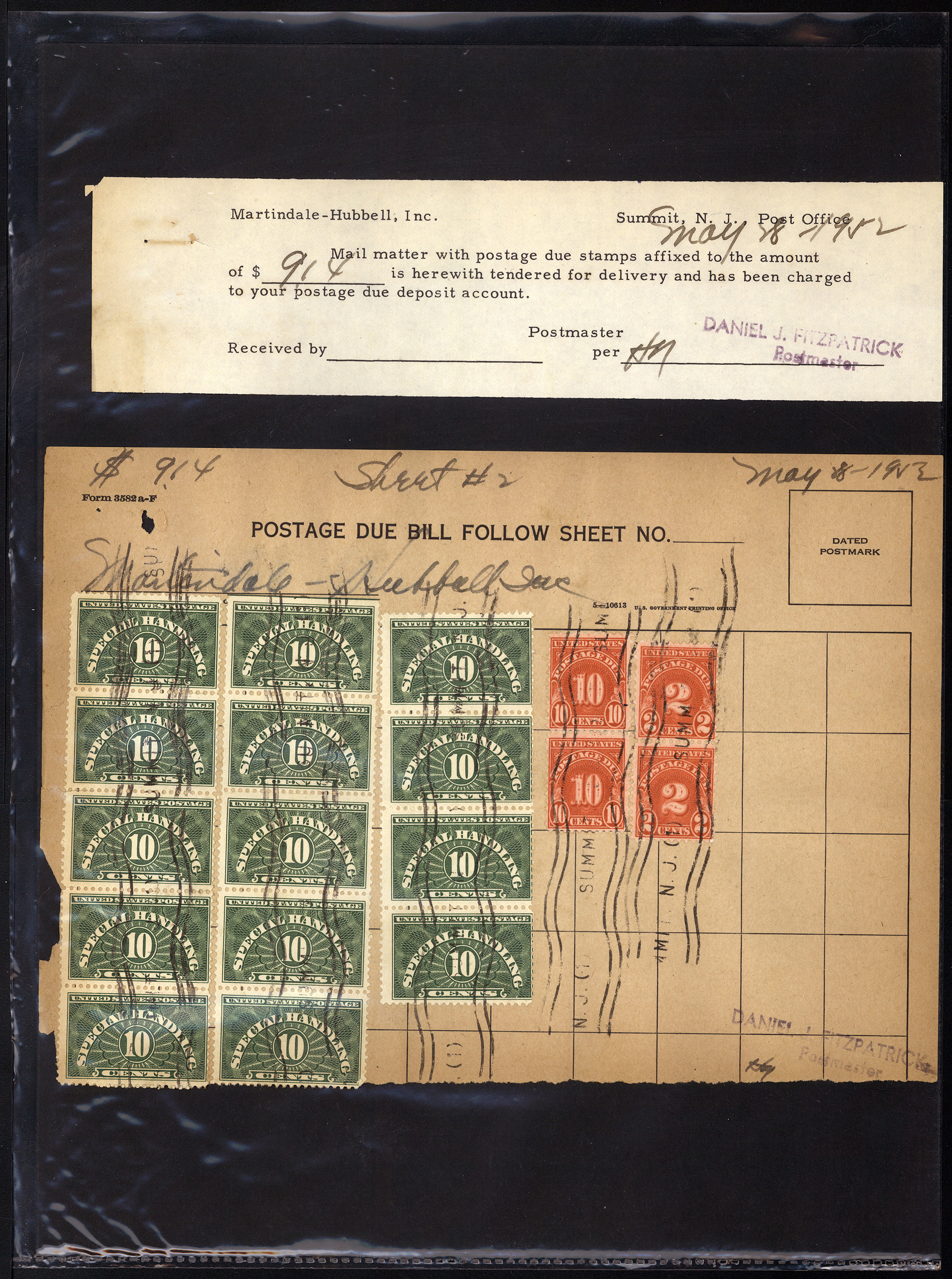
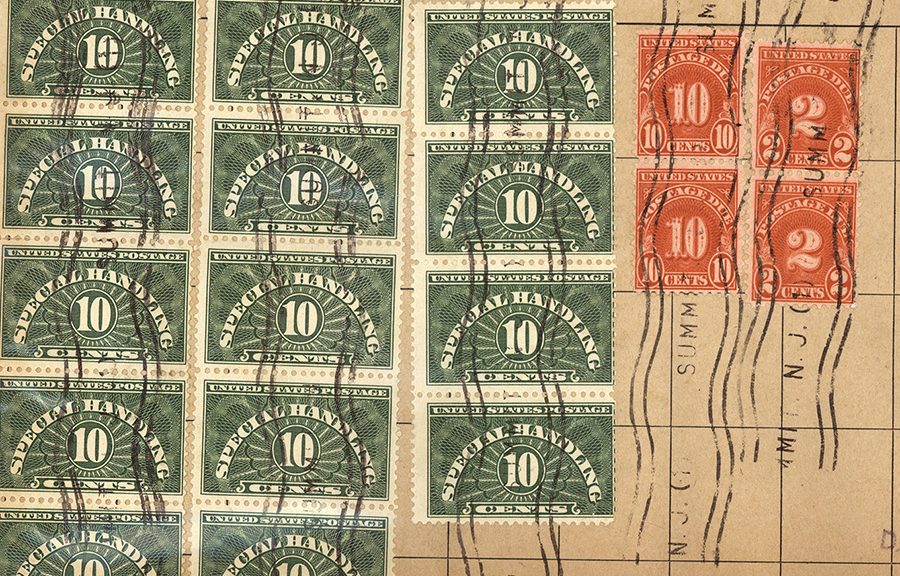
What I had never seen before were follow sheets with OTHER types of back-of-book stamps or a mixture of different stamp types wallpapering them. That’s what jumped off the screen to me.
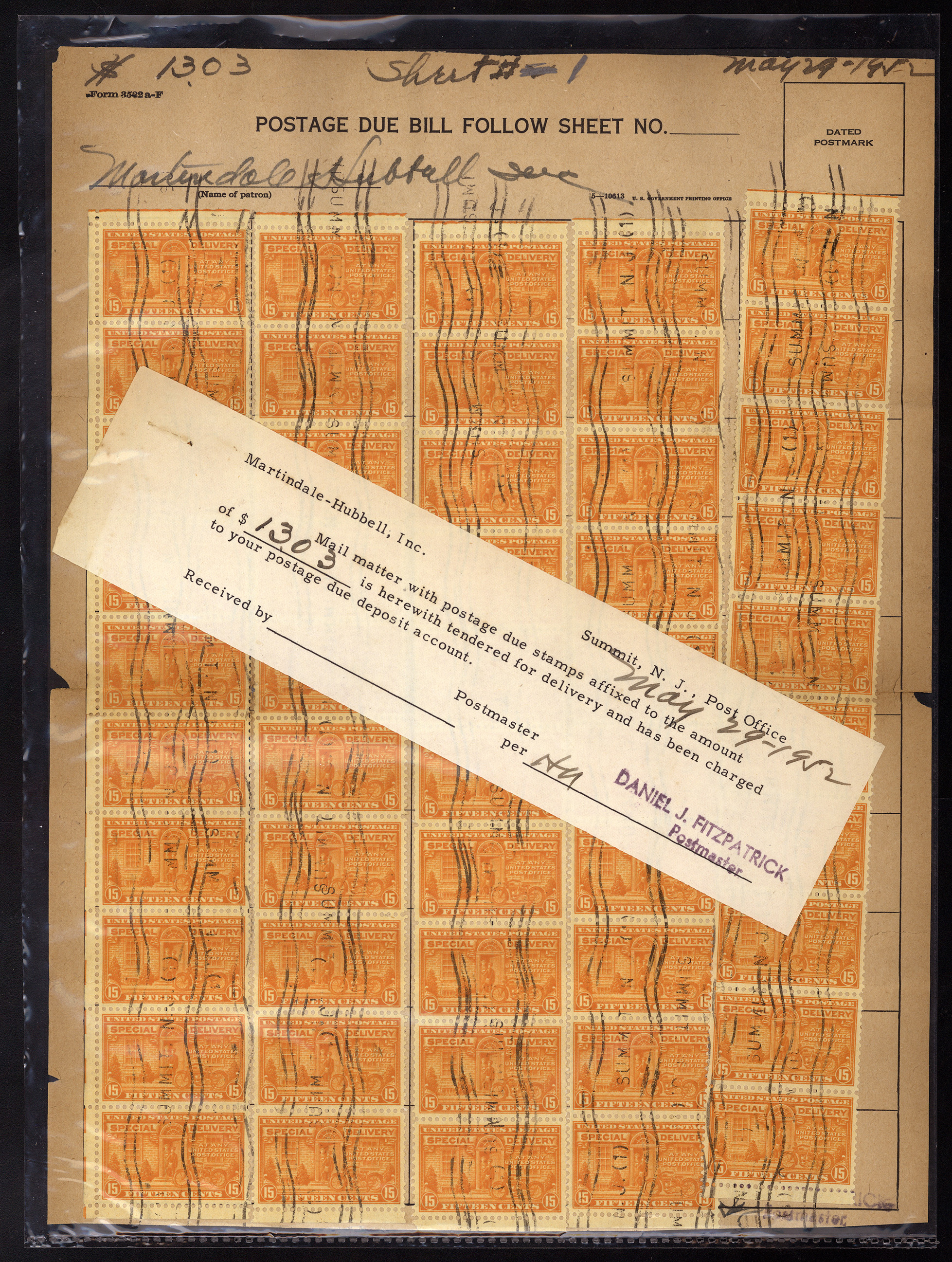
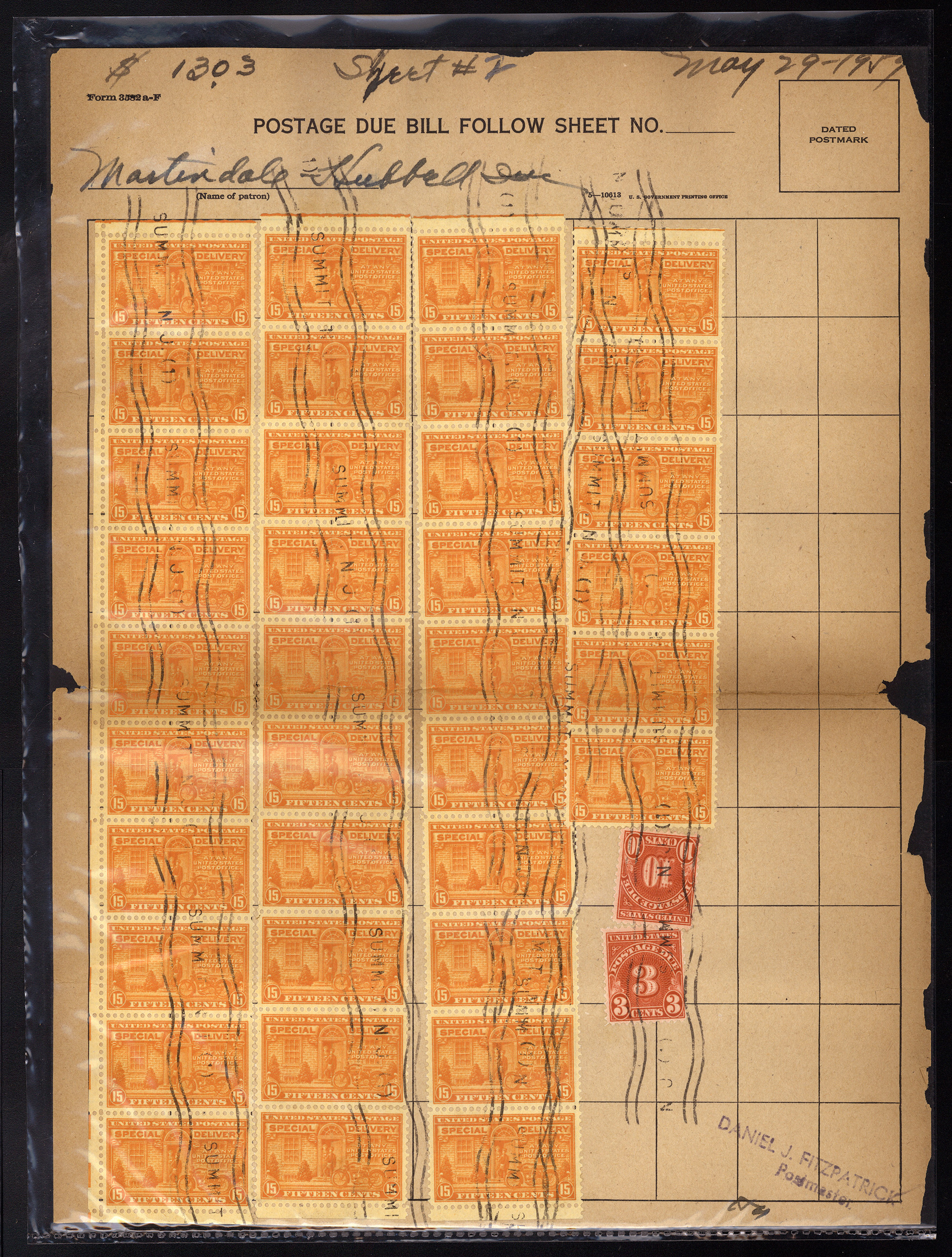
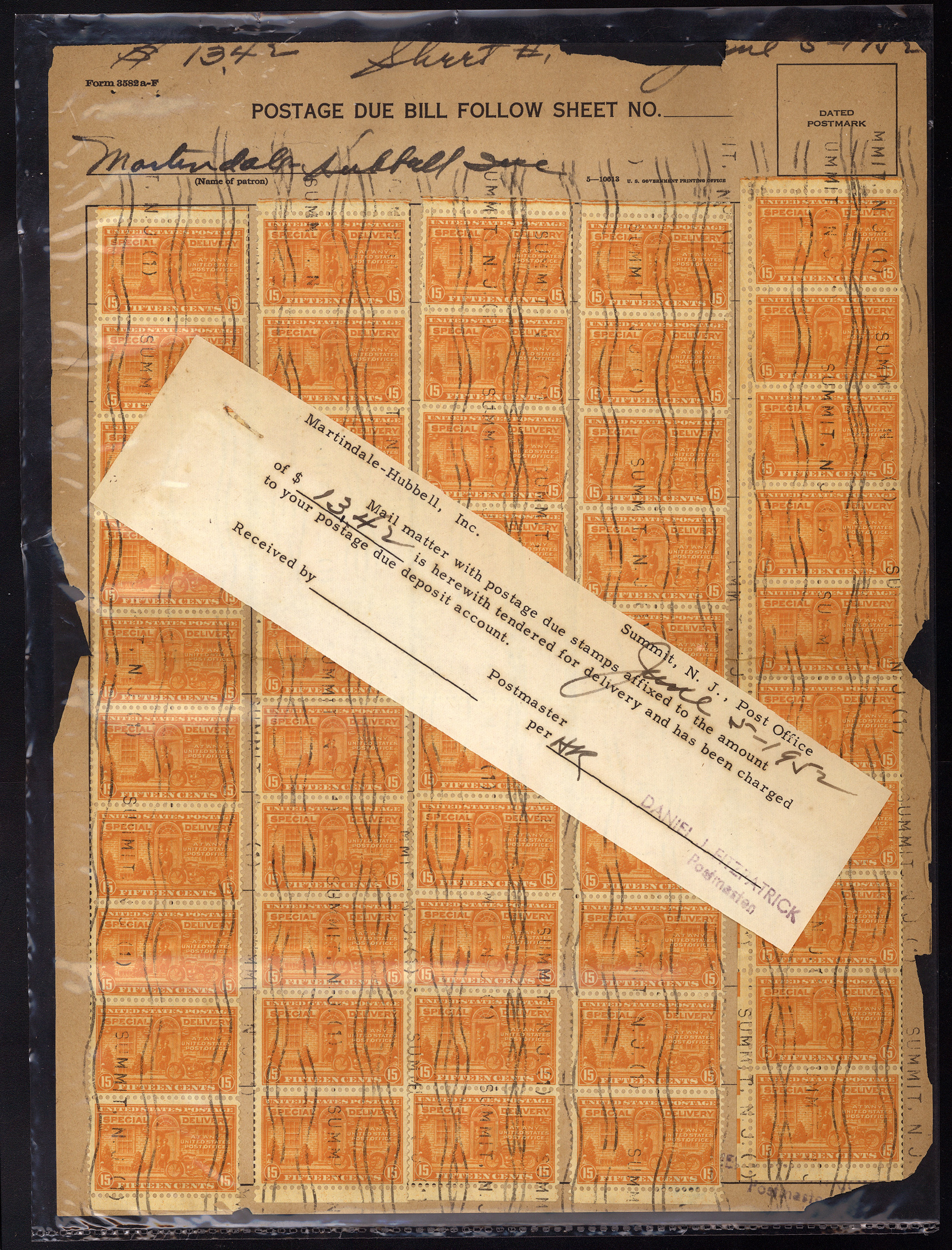
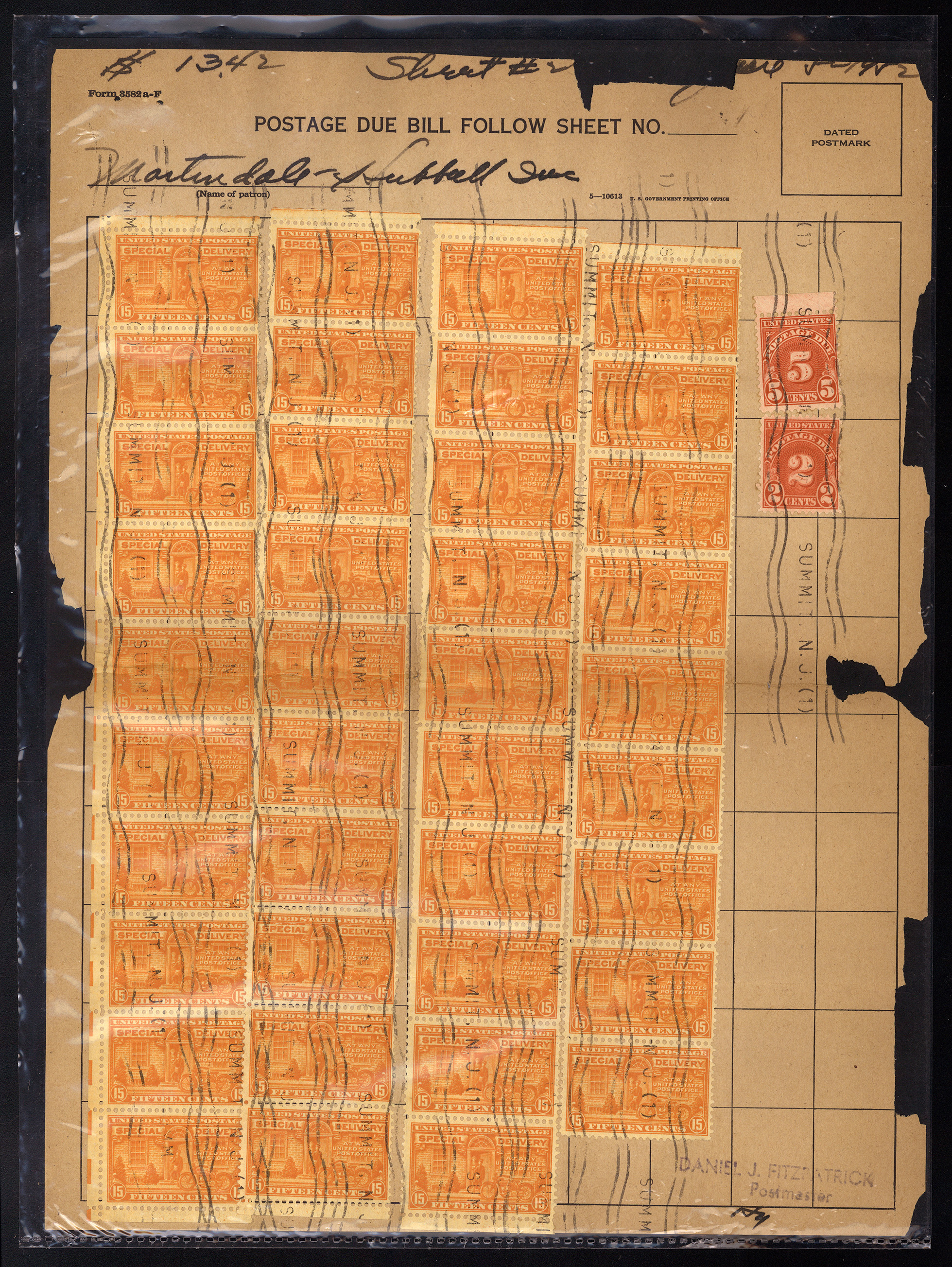
These follow sheets are all from the same post office, dated 1952, so well before the phaseout of postage due stamps. They are INCREDIBLY brittle and fragile. I had to remove the staples and stabilize the documents with archival mending tape as best I could… even so, I wound up with edge chips all over the damned place.
Some are incomplete. I’m showing them in chronological order.
I don’t know if they ran out of postage due stamps and were just using what they had available, but given the mix of both postage due and non-postage due stamps on individual transactions over a period of time, I can’t help but wonder if this was some sort of attempt at accounting for the types of services provided (special delivery vs. special handling vs. normal delivery?). I’d really love to know what the thought process was.
I’d love if they were in better condition, but beggars can’t be choosers… I’ve never seen anything like them before.