Improper Use of Postage Stamps to Pay a Tax for Which Revenue Stamps Were Never Actually Used
I picked this item up from Denny Peoples at the Indianapolis MSDA show back in November. It’s actually far more interesting (IMO) than initially meets the eye.
The 1932 check tax, as discussed by Robert Patterson and Bob Hohertz in the Fourth Quarter 2012 issue of The American Revenuer, was a very unpopular 2-cent tax that went into effect on June 16, 1932 and lasted through the end of 1934. It was extremely regressive during a period where the country was entering into the Great Depression. Legislative efforts to end the tax early met with no success. “Estimates are that it produced less than half of the original Treasury revenue target while seriously accelerating the withdrawal of money from already hard-hit banks.”
Unlike the check tax of the Spanish American War period, no revenue stamps were affixed to documents. Instead, it was incumbent upon the banks to track checks, withdraw funds from account balances periodically, and remit the funds to the government.
There were several methods used to notify the account holder about the tax: (1) Checks were handstamped or penciled with a notice that an additional 2 cents above and beyond the check amount would be deducted, (2) a notice of the taxes would be put on the depositor’s bank statement, or (3) a notification slip would be sent to the depositor showing the number of checks written that month and the amount of tax withdrawn.
Revenue stamps never entered into the equation.
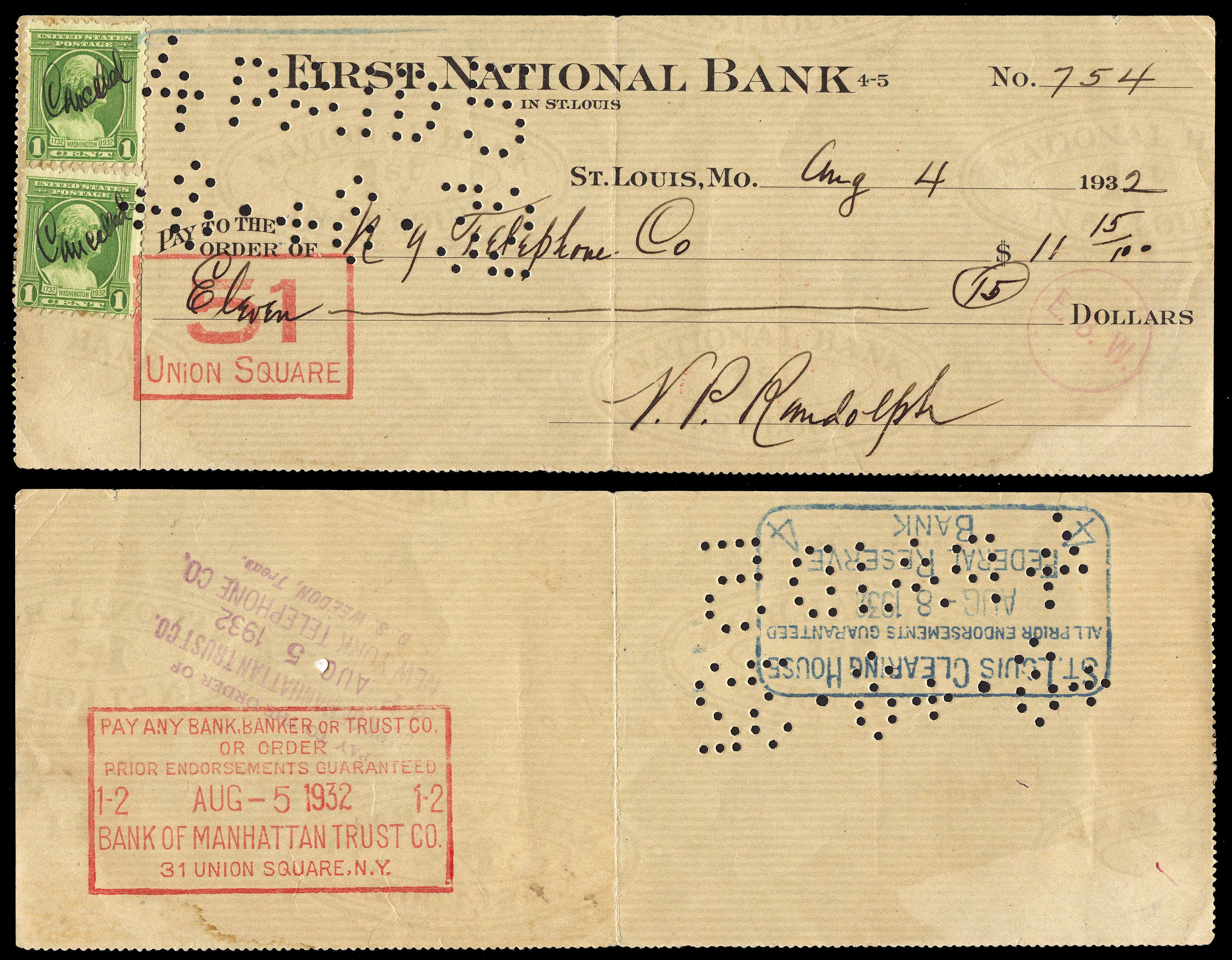
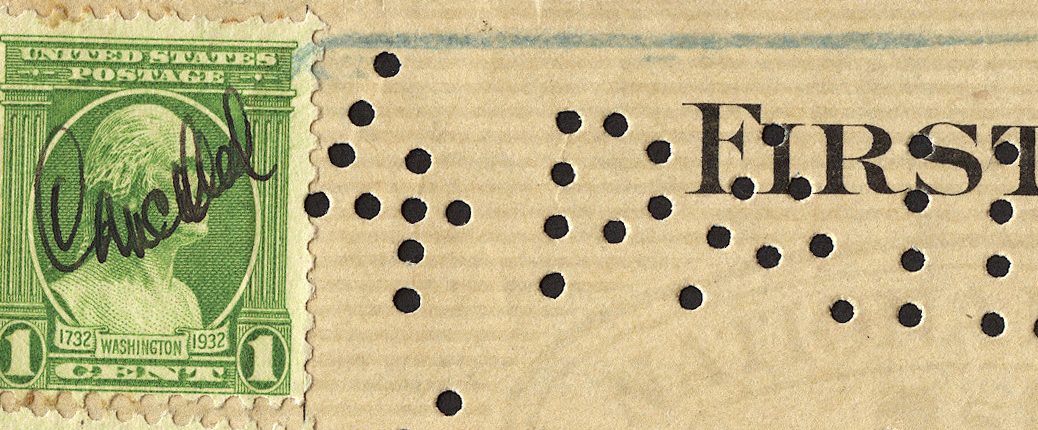
And so what happened with the check below? The two postage stamps, both Scott #705, the 1c denomination of the Washington Bicentennial, are manuscript canceled in the same hand with the same ink in which the check was written, and the bottom stamp is tied by the red handstamp as well as the perfin bank cancel, which also kisses the top stamp at right. I don’t believe it is contrived in any way.
Well, what I believe is that the person that wrote this check was an older person, unfamiliar with the new mechanism of this tax. They were, however, familiar with the LAST check tax from the Spanish American War period, in which revenue stamps were affixed to pay the tax. So in their mind they should affix revenue stamps, but since none were readily available as no one was using revenue stamps in such a fashion during this period (there were revenue stamps being used for other purposes, but not for checks) they did the next best thing… and used postage stamps to “pay the tax.”
Completely unnnecessary and this item really shouldn’t exist… but it does.
P.S. In all likelihood, the bank still probably took 2 cents out of the writer’s bank account anyway, so they wasted 2 cents worth of postage.